
Why Behavioral Health Window Design Demands a System-Level Approach
June 2, 2026
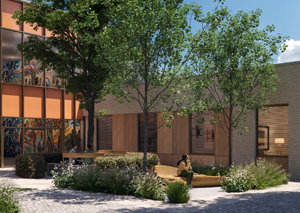
The design of behavioral health facilities requires a complex, multifaceted approach. Design teams and facility leaders must balance patient safety, regulatory expectations, building performance, and long-term durability while creating spaces that feel calm, open, and supportive.
Beyond Aesthetics: The Critical Role of Windows in High-Acuity Care
In patient-accessible areas, windows must do much more than simply let in light. They are points of interaction that must help reduce ligature risk, withstand human impact, preserve visibility, and support a more therapeutic environment – all without compromising long-term performance.
These complex design challenges helped drive the development of the GT6300 Human Impact Window from Graham Architectural Products. Ideal for both new construction and retrofit applications, this fixed window system is purpose-built for behavioral health environments, bringing integrated safety, system-level human-impact resistance, thermal performance, daylight, and visibility into a unified, purpose-built system.
Meeting the Gold Standard: AAMA 501.8-23 and Human Impact Resistance
Specifying for state and federal projects requires adherence to strict guidelines for behavioral health criteria. The GT6300 Human Impact Window is engineered to align with the New York State Office of Mental Health (OMH) and the U.S. Department of Veterans Affairs (VA) design guides. It is also tested in accordance with AAMA 501.8-23, the premier industry standard for determining human impact resistance in behavioral health window systems, and engineered to withstand repeated 2,000 ft-lb impact events, helping the window perform under the demanding conditions often associated with high-acuity care environments.
Integrated Safety vs. Component Add-ons
Anti-ligature design shouldn’t be an afterthought. By integrating the concealed energy-retention bar and dedicated sash-retention system into the frame itself, along with a fixed, hardware-free design, the GT6300 eliminates the ‘bolted-on’ look that can contribute to an institutional feel while reducing accessible ligature points in patient-accessible areas.
Unlike solutions that focus only on individual components, the GT6300 is designed as a system-level human-impact window. Its dedicated sash-retention system ensures the glazing remains secured within the frame during and after repeated impact events, maintaining the building envelope and preventing breach when containment matters most.
Healthcare facilities can also support privacy without sacrificing safety or access to natural light. Optional 1″ between-glass blinds feature an anti-ligature thumbwheel and dedicated maintenance-only access, helping facilities manage privacy and visibility without introducing patient-accessible controls. This supports healing environments by preserving daylight while giving care teams greater flexibility to balance openness, observation, and privacy.
Balancing Privacy, Daylight, and Thermal Performance
The GT6300 also delivers strong thermal performance. With U-factors as low as 0.22 and a Condensation Resistance Factor of 73, the window system supports energy-efficiency goals while contributing to occupant comfort and long-term facility performance.
In behavioral health environments, the details patients can reach matter. Window systems that do not adequately address ligature risk, human impact, visibility, privacy, or performance can create safety concerns, increase maintenance challenges, and lead to costly retrofits. The GT6300 helps address those concerns with a thoughtful, integrated approach to safer healing spaces.
Key Features
Impact Resilience: Engineered for repeated 2,000 ft-lb impact events (AAMA 501.8).
Ligature Mitigation: Fixed, hardware-free design with a concealed energy-retention bar.
Patient Agency & Privacy: Between-glass blinds with anti-ligature thumbwheels to manage circadian rhythms without safety risks.
Energy Envelope: U-factors as low as 0.22, supporting operational efficiency.
By bringing anti-ligature design, system-level human-impact resistance, high thermal performance, and privacy options into one fixed window system, the GT6300 balances stringent safety requirements with a healing, daylight-filled environment that contributes to healing. In behavioral health design, that balance can make all the difference.
Download the GT6300 Technical Spec Sheet or request a consultation to see how our human-impact testing data can support your next behavioral health submittal. Visit our contact page to get started.